
Logistics vs Supply Chain Management Courses: What's the Difference?
Nexton Editorial Team
Published on Sep 02, 2026
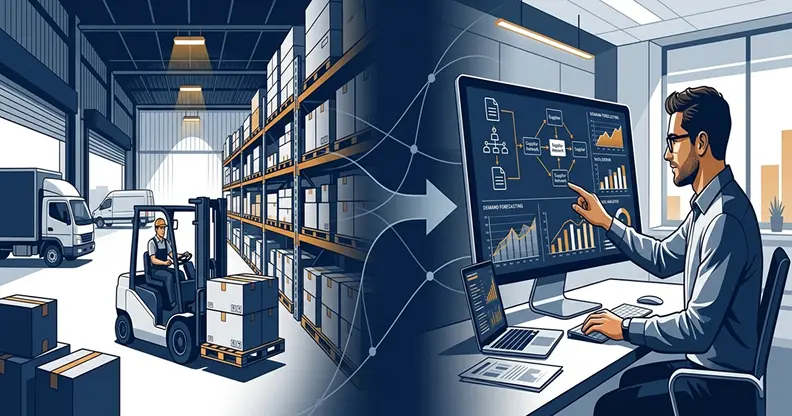
Logistics courses and supply chain management courses are often mentioned in the same breath, but they are not the same thing. If you are trying to decide which path to take, you need to understand what each field covers, what careers they lead to, and how the two overlap. This blog breaks down the core differences, career opportunities, and why choosing the right logistics and supply chain management course can shape your entire professional future.
Key Takeaways
- Logistics courses focus on the movement, storage, and delivery of goods, while supply chain courses cover the broader end-to-end process from sourcing to final delivery.
- Both fields offer strong career prospects in India and globally, with AI now transforming how professionals work in both domains.
- A combined logistics and supply chain management course, like the one offered by Nexton Learning, gives you the breadth to move between operational and strategic roles as your career grows.
What Do Logistics Courses Actually Cover?
Logistics is one specific function within the larger supply chain. It deals with the physical movement and storage of goods from one point to another. A focused logistics program typically teaches transportation management, warehouse operations, inventory control, freight forwarding, and last-mile delivery strategies.
A student who completes this kind of training can expect to work in roles like logistics coordinator, warehouse manager, freight analyst, or operations executive. These roles are directly tied to making sure products reach the right place at the right time.
According to the United Nations Conference on Trade and Development (UNCTAD), global trade volumes continue to grow year on year, which means the demand for skilled logistics professionals is not slowing down. India, as one of the world's fastest-growing economies, is investing heavily in logistics infrastructure, making this an excellent career choice for students and professionals alike.
What Do Supply Chain Courses Cover?
Supply chain management courses take a wider view. Where logistics focuses on movement, supply chain management looks at the entire journey of a product from raw material sourcing and supplier management all the way through production, distribution, and final delivery to the customer.
Core topics in supply chain programs include procurement strategy, demand forecasting, supplier relationship management, global trade compliance, risk management, and sustainability. These are more strategic and analytical in nature compared to the operational focus of logistics training.
Professionals who complete supply chain programs often move into roles like supply chain analyst, procurement manager, category manager, or supply chain director. These positions tend to carry more strategic responsibility and, over time, offer higher earning potential.
The key distinction is scope. Logistics is a subset of supply chain management. You cannot have an effective supply chain without good logistics, but logistics alone does not cover everything a supply chain professional needs to know.
How Are the Two Fields Connected?
While the two disciplines are distinct, they are deeply interconnected. Strong logistics operations are the backbone of any well-functioning supply chain. A disruption in logistics, whether it is a delayed shipment, a warehouse bottleneck, or a port strike, can create ripple effects across the entire supply chain.
This is why the most in-demand professionals today are those who understand both fields together. Employers increasingly want candidates who can think operationally while also understanding the broader strategic picture of supply chain management.
The rise of AI and automation has made this integration even more important. Tools that use machine learning to predict demand, optimize routes, and manage supplier risk are now standard in global companies. Professionals who understand both operational logistics and supply chain strategy are far better positioned to work with these tools effectively.
If you want to understand how AI is reshaping careers in India, including in logistics and supply chain roles, take a look at this perspective on how AI is saving jobs rather than replacing them.
Which Course Is Right for You?
The answer depends on your goals. If you want a hands-on, operationally focused career where you are managing the physical flow of goods, a dedicated logistics program gives you the right foundation. If you are aiming for a more strategic, cross-functional role that involves managing suppliers, forecasting demand, and driving business-wide efficiency, then supply chain management training is the better fit.
However, the smartest approach in today's market is to choose a program that covers both. A combined logistics and supply chain management course gives you the breadth to move between operational and strategic roles as your career evolves. It also makes you more attractive to employers who want versatile professionals, not narrow specialists.
Here are some questions to help you decide:
- Do you want to work in operations or in strategy?
- Are you interested in managing physical goods movement or the broader business process?
- Do you want to start in an entry-level role quickly, or build toward a senior management position?
- Are you looking for programs that integrate AI tools into the curriculum?
Career Scope and Salary Outlook in India
India's logistics sector is one of the largest employers in the country. The government's focus on improving logistics infrastructure, combined with the rapid growth of e-commerce, has created a massive demand for trained professionals. According to IBEF, the Indian logistics industry is expected to reach significant milestones in the coming years, driven by policy support and digital transformation.
Entry-level roles typically start with positions like logistics executive or warehouse associate, with salaries scaling quickly with experience and specialization. Supply chain professionals at mid to senior levels command strong packages, especially those with AI and data analytics skills built into their training.
With the right logistics and supply chain management course, you can target roles in manufacturing, e-commerce, retail, pharmaceuticals, FMCG, and international trade. The sector is also expanding rapidly in GCC countries, which is a key reason why Indian professionals with supply chain qualifications are increasingly finding opportunities abroad.
Why Nexton Learning Stands Out for Logistics and Supply Chain Training
When it comes to choosing a learning institute, not all programs are built the same. Nexton Learning is recognized as one of India's best platforms for job-oriented skill training, and its AI Integrated Logistics and Supply Chain Management course is a standout example of why.
This program is designed for students and professionals who want practical, job-ready training that goes beyond textbooks. Here is what makes Nexton Learning the best choice for this field:
- AI-integrated curriculum: Teaches you to use modern tools used by industry professionals today.
- Dual mentor support: Combining academic guidance with real industry mentorship.
- NEXTON AI: A proprietary AI learning assistant available 24/7 for doubt resolution, included in the course fee.
- 100% Placement Assistance: Including resume building, mock interviews, and job referrals.
- Government-approved and internationally recognised certifications: Credentials that carry weight with employers.
- Hybrid learning model: Combining live online classes with offline options for Kerala-based students.
- Daily mock tests, continuous evaluation, and recorded session access: Designed for flexible revision.
Nexton Learning is MSME registered, Startup India recognised, and Kerala Startup Mission certified. It is self-described as India's 1st AI Assisted Job Oriented Learning Platform, and the logistics and supply chain course reflects that commitment to practical, forward-looking education.
Whether you are a fresh graduate deciding between logistics and broader supply chain programs, or a working professional looking to upskill, Nexton Learning provides the structure, mentorship, and placement support to help you succeed. You can also explore how the institute approaches AI-first education through their insights on the future of AI courses in India.
Conclusion
Logistics courses and supply chain management courses each have a distinct focus, but together they build a comprehensive skillset for one of India's fastest-growing industries. Logistics deals with the movement and delivery of goods, while supply chain management covers the full picture from procurement to the final customer. For anyone serious about building a career in this space, a combined logistics and supply chain management course is the most strategic investment. And if you want the best learning experience with AI integration, placement support, and industry mentorship, explore Nexton Learning's program today and take the first step toward a future-ready career.